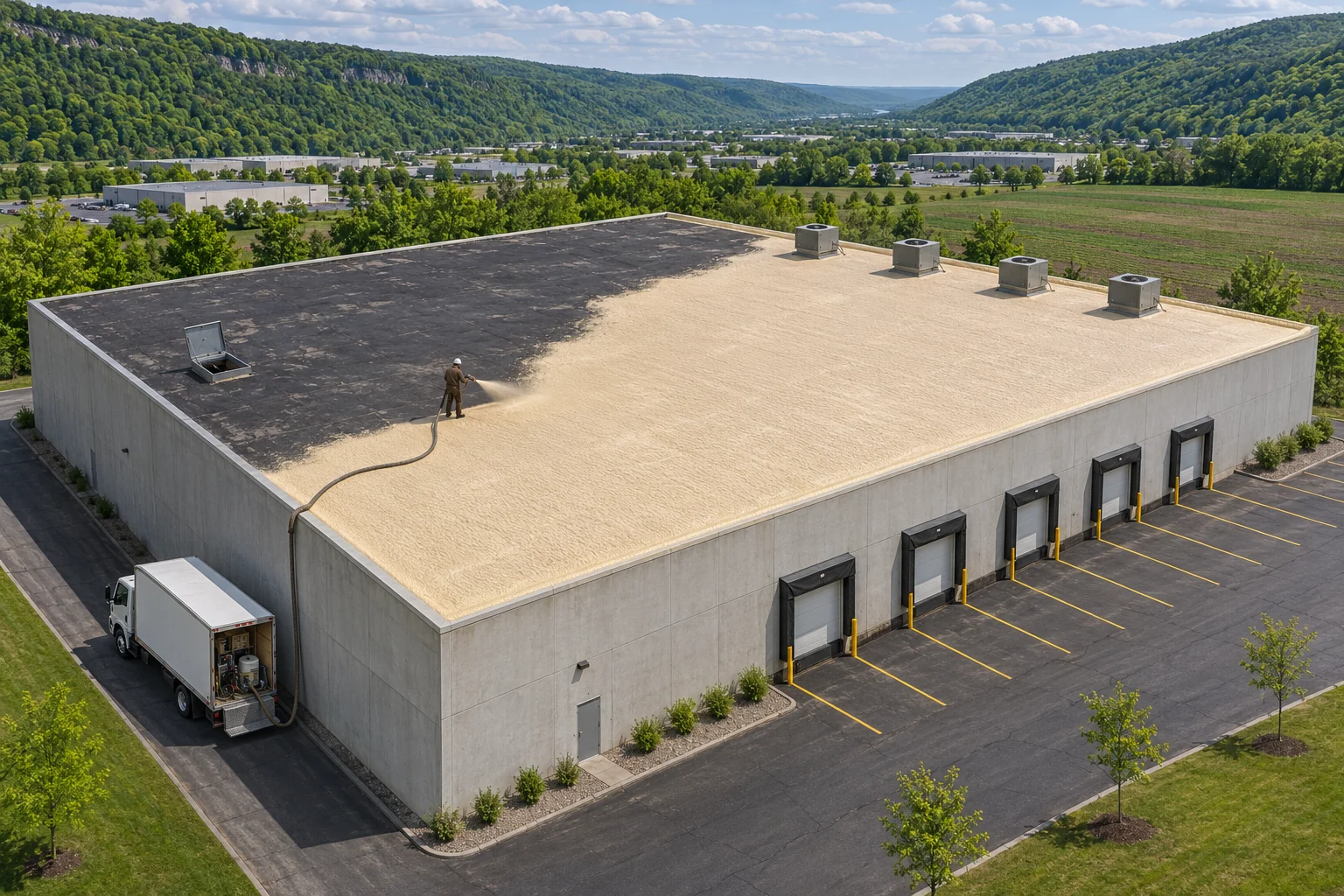
Wilkes-Barre spray foam roofing combines insulation with a protective coating after the existing roof is checked for dryness, attachment and repair needs.
Wilkes-Barre spray foam roofing requires an assembly assessment before foam thickness and the protective coating are specified for the building.
A Dry and Secure Base
The existing roof must support the proposed foam assembly. We inspect attachment, moisture and earlier repairs before evaluating an overlay. Insulation requirements are considered with interior use and the roof’s existing layers, so the new work addresses the building as a complete assembly.
Remove Failed Material First
Wet insulation, loose roofing and weakened deck areas need correction before installation. Covering those defects can leave moisture and movement below the foam. We establish removal boundaries and repairs before considering where an overlay can proceed, including any further structural evaluation required by the findings.
Spray Foam Roofing Preparation in Wilkes-Barre
Spray Foam Roof Insulation in Winter
Inspect
Interior humidity and roof temperature influence moisture conditions within an assembly. We review condensation evidence alongside rain leaks before choosing insulation work. Application requirements are checked separately, including the substrate temperature and the weather window needed for foam and its protective coating.
Spray Foam Roofing Cost Per Square Foot
Inspect
Foam needs a project-specific scope that includes thickness, substrate repairs and protective coating. The published coating comparison alone does not price a foam assembly. Access, removal work and protection around nearby surfaces also affect the estimate after the existing roof has been inspected.
Air Intakes and Nearby Surfaces
Inspect
Application of foam requires planning around equipment intakes, parked vehicles and adjacent work areas. We establish protection and access arrangements before spraying begins. Wind and exposure conditions influence the work window, with building operations coordinated around the application area.
Damage at Service Paths
Inspect
Repeated trips to rooftop equipment can damage a protective surface. We inspect the path, curbs and surrounding foam when defining maintenance repairs. The finished system needs access provisions that account for those visits and allow localized damage to be found and addressed.
Commercial Roof Coating Options for Wilkes-Barre
Foam and Its Protective Finish
Foam roofing is installed as an assembly with a protective coating. The two materials have different jobs and maintenance needs. Selection includes substrate preparation, insulation thickness and the coating specification, with attention to details around curbs and penetrations.
Coating Without Added Foam
A retained roof that needs surface restoration alone is assessed for coating after repair. Existing insulation and moisture conditions determine whether that approach fits. Metal panel connections still receive their own preparation and repair before the finish is applied across the roof.
Replacement of Failed Areas
Some parts of an existing roof require removal before new work is installed. Wet materials and unreliable attachment are addressed directly. The repair boundary can differ from the visible stain below, so inspection establishes the extent of work rather than assuming a surface overlay is enough.
Benefits of Coating Your Roof
WarehousesCommercial blocksPlant roofs
Insulation at the Roof Assembly
Spray foam provides an insulation layer where the assembly assessment supports its use. Thickness is specified for the particular roof and building conditions. The coating protects the exposed foam surface, while perimeter and penetration details connect the work to retained components.
Continuous Coverage Around Details
Applied foam can follow changes in roof profile and connect around prepared details. The work still requires dependable substrate attachment and completed flashing repairs. Protective coating then covers the foam to the specified thickness, including transitions beside equipment and roof edges.
Localized Surface Maintenance
Inspection can identify small coating defects before broad foam exposure develops. Compatible repairs address the affected surface after moisture and attachment have been checked. Keeping service routes visible and accessible helps property staff spot changes around curbs, drains and frequently visited equipment.
Spray Foam Roofing for Wilkes-Barre Buildings
Describe interior moisture concerns, existing insulation and rooftop equipment. These details help establish the foam assembly and the preparation it requires.
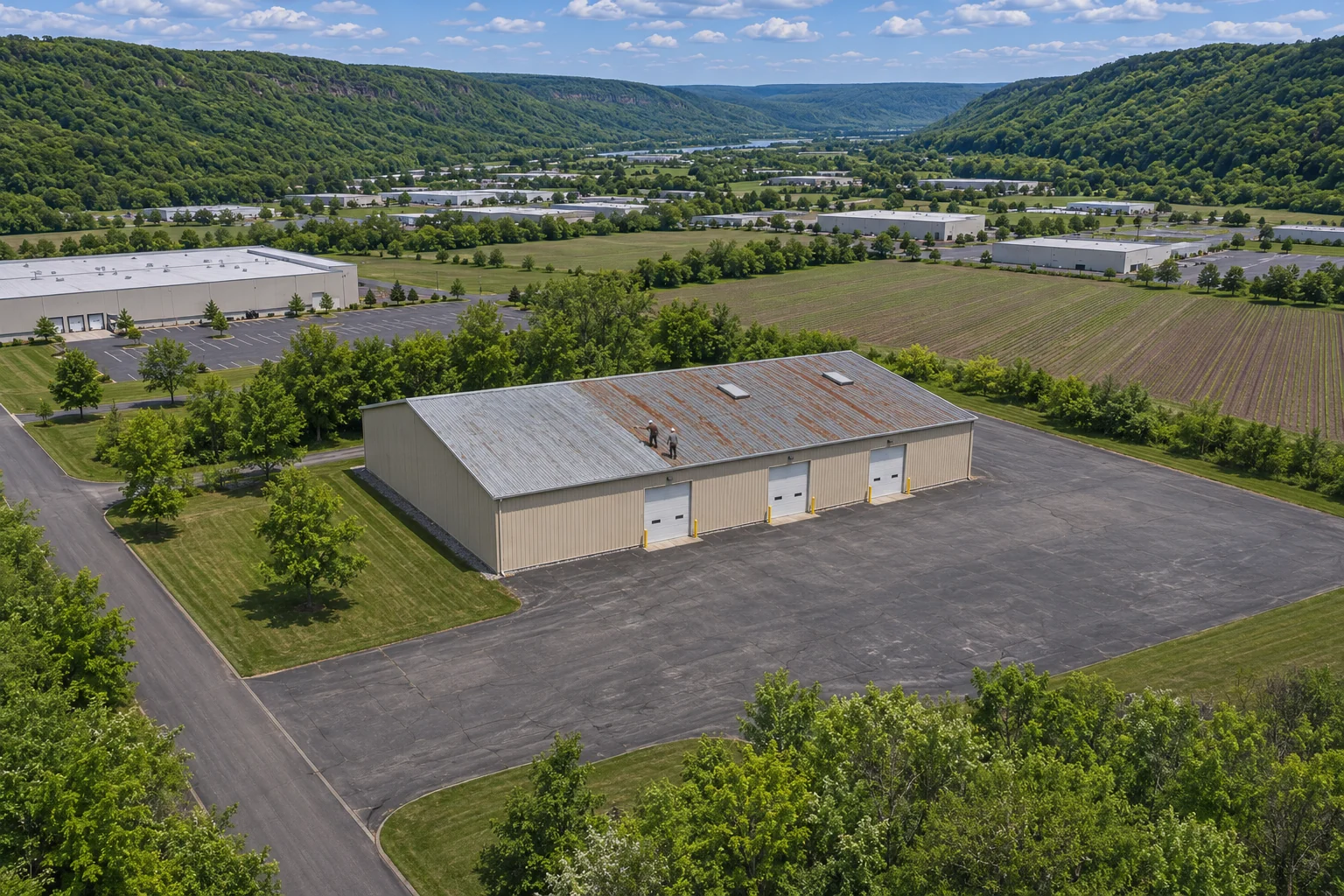
We inspect the current roof assembly and compare exterior defects with interior moisture evidence. Attachment and retained materials are evaluated before an overlay is considered. Findings identify removal or repair areas and establish the base on which the foam would be applied.
02
Define the Insulation Work
Building use and existing roof layers inform the proposed insulation thickness. Moisture movement and condensation concerns receive attention alongside rain entry. The project scope identifies the complete foam and protective-coating assembly, including the details where it meets retained roofing.
03
Prepare and Protect the Work Area
Loose or damaged roofing material is addressed and the substrate is prepared for application. Air intakes and nearby surfaces are considered in the protection plan. Staging and access are coordinated with the property contact so spraying can proceed under the required conditions.
04
Apply Foam and Coating
Foam is installed to the specified profile and thickness on the prepared substrate. Its protective coating follows the selected system instructions. Conditions during application and curing are checked before the next operation or access across the roof.
05
Check Surface and Maintenance Access
The finished coating, transitions and equipment access routes are reviewed. Exposed foam or damage requires compatible repair. Maintenance guidance identifies areas needing periodic attention, especially around penetrations and places reached by service technicians working on rooftop equipment.
A metal roof being considered for foam still needs dependable panels and connections beneath the overlay. Commercial metal coating assessment identifies corrosion, loose fasteners and failing laps, helping establish whether repair or removal belongs in the project before additional roofing is installed.
Silicone Protective Coating
Where silicone is selected as the protective finish, compatibility and specified coverage remain essential. The coating work includes details around penetrations and the field surface, with a maintenance approach that uses repair materials appropriate to the finished system.
Spray Foam Roofing Questions for Wilkes-Barre
Does winter foam insulation planning need to account for interior humidity?
Interior humidity belongs in the roof assembly assessment because moisture can develop below the exterior finish. We compare condensation evidence with rain-entry locations and inspect wet materials before proposing foam. Insulation thickness, substrate condition and protective-coating maintenance are considered together instead of treating added insulation as the only requirement.
Can a foam roof proposal rely on the coating price range alone?
Foam installation requires its own scope and estimate. The $2.50–$4 per square foot coating range and $5–$8 replacement comparison describe the published coating planning model. Foam thickness, preparation, substrate repairs and the protective finish need separate definition before a price can be attached to that assembly.
Can spray foam keep a leaking metal roof serviceable without repairing its defects?
Metal defects need repair before foam is evaluated as an overlay. Loose panels, wet materials and damaged flashing remain problems beneath a new surface. We establish attachment and dryness first, then consider the foam assembly and the upkeep of its protective coating. A new finish does not replace those checks.
What happens when foam becomes exposed through a worn topcoat?
Exposed foam needs prompt assessment of surface condition and moisture before repair. The damaged area is prepared and restored with compatible materials according to the selected system. Inspection also looks for the cause of wear, including service traffic or recurring damage at a curb, so the repair addresses the working condition.
Can equipment stay on the roof during foam work?
Equipment arrangements depend on access, flashing details and application protection. Some units can remain while work proceeds around prepared connections; other conditions require coordination with the responsible service trade. We review intakes, clearances and maintenance routes before application. The completed roof must still allow the equipment to be serviced appropriately.
Discuss Wilkes-Barre Spray Foam Roofing
Discuss substrate repairs, insulation requirements and protective coating for your commercial roof.