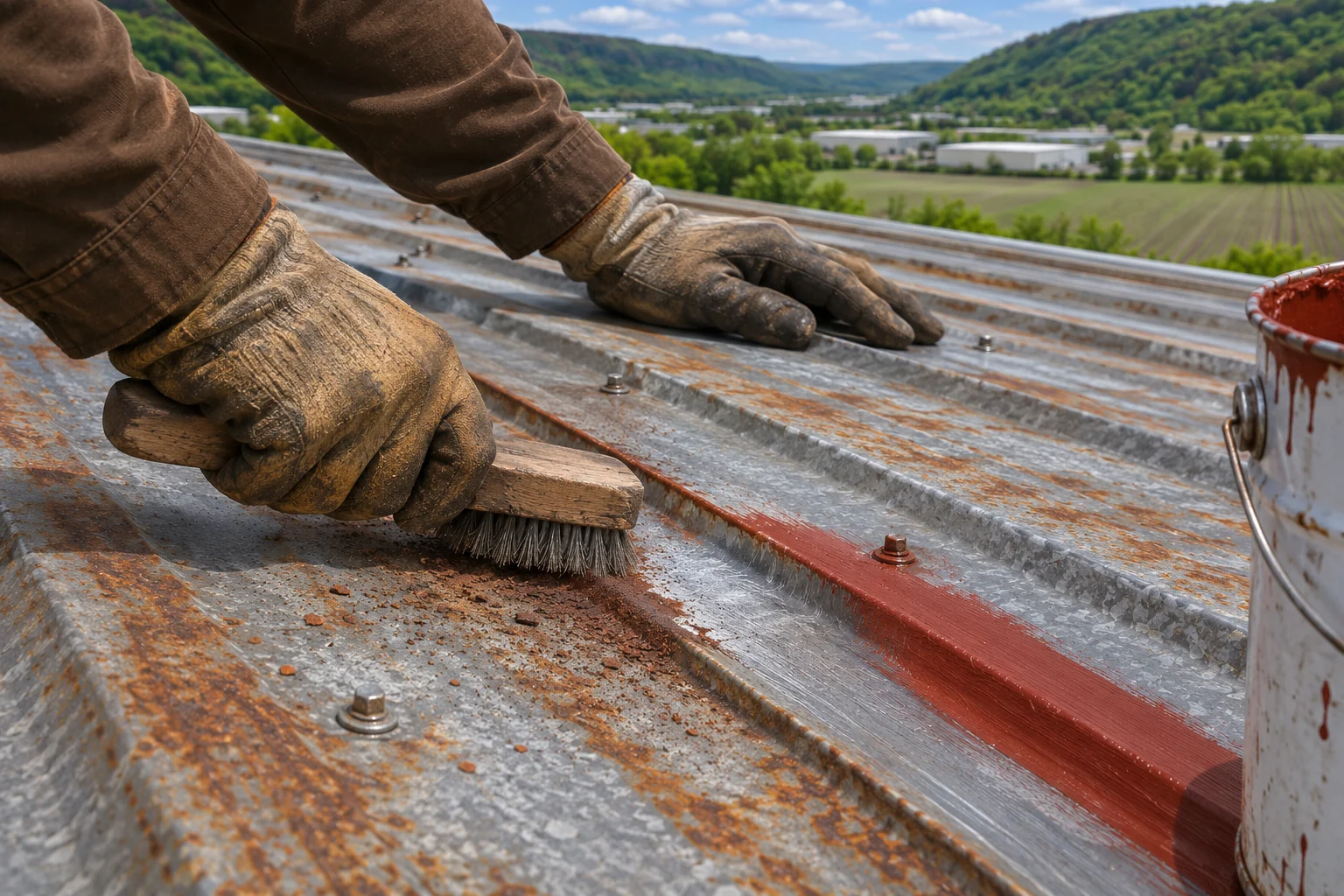
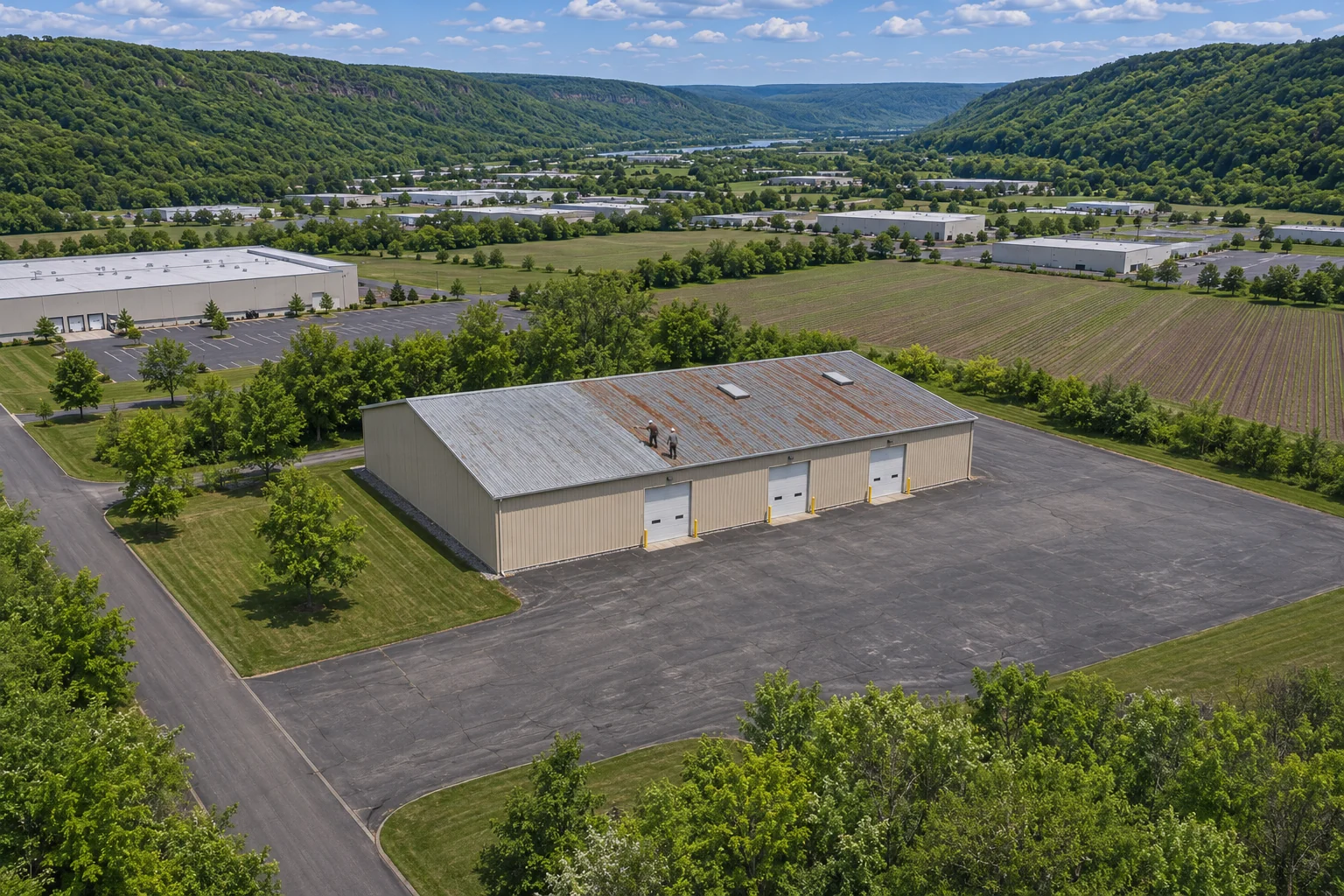
Panel condition checkedFasteners repaired before sealingCoating thickness verified
Wilkes-Barre Commercial Metal Roof Coating Fit
Wilkes-Barre commercial metal roof coating begins with the attachment and condition of the panels beneath the existing finish.
Panels Worth Retaining
Firm panels with treatable surface rust provide a starting point for restoration. We check the metal around screws and across overlaps, then identify preparation that exposes a clean, stable surface. Existing finishes receive compatibility checks so the coating system has a dependable base across the whole roof.
Repair Before Application
Perforated sheets, distorted laps and enlarged fixing holes call for metal repairs before coating. Wet insulation also needs investigation. We separate these repairs from surface preparation so weakened components receive direct attention instead of disappearing beneath a fresh finish. Structural concerns require evaluation by the appropriate qualified professional.
Commercial Metal Roof Coating Preparation in Wilkes-Barre
Coating a Metal Roof After Hail
Inspect
Impact marks deserve more than a quick look from the ground. Open panel seams, punctures and damaged flashing change the repair decision. We inspect connections around dents and check whether water has reached the assembly below before selecting an approach for the affected metal.
Commercial Metal Roof Coating Cost Per Square Foot
Inspect
Preparation changes the labor even when two roofs have equal area. Rust removal, sealing hundreds of fasteners and repairing penetrations take different amounts of work. Access and the specified coating thickness also affect the estimate, which follows an inspection of the actual roof.
Exposed Fastener Movement
Inspect
Loose screws and worn washers leave openings at individual attachment points. Each affected fixing needs an appropriate repair before it is sealed. Tightening a fastener into weakened metal leaves the underlying problem in place, so we examine the hole and supporting connection as part of preparation.
Previous Patch Edges
Inspect
Old repair material can separate where a patch meets the original panel finish. Those edges need cleaning and an adhesion check. Incompatible layers are removed or treated according to the selected system before the surrounding surface is coated, with special attention to moving laps.
Commercial Roof Coating Options for Wilkes-Barre
Silicone at Prepared Details
Silicone coating is considered after the existing finish, drainage and adhesion have been checked. The material choice includes how future repairs will attach to the finished roof. Primer requirements and application thickness follow the selected product instructions for the particular metal surface.
Acrylic on Draining Panels
Acrylic work requires a drying window and preparation matched to the existing finish. Water left at laps or accumulated behind debris must be addressed. Coverage along ribs and edges receives attention because the raised profile changes how material reaches each face.
Foam Over an Approved Assembly
Spray foam adds an insulation layer where the roof assembly supports that work. Substrate condition, attachment and moisture are checked before an overlay is considered. Protective coating and service access are part of the assembly, with repairs defined before installation.
Benefits of Coating Your Roof
WarehousesCommercial blocksPlant roofs
Sealed Panel Connections
Coating work includes detail treatment at laps, screws and penetrations. Completing those connections first gives the field application a continuous transition across the prepared roof. The coating covers the serviceable metal while repaired flashing handles the edges and openings that need separate attention.
Renewed Surface Coverage
Weathered finish can leave metal exposed across ribs and broad panel flats. Cleaning, treating corrosion and applying the specified coating restore coverage over those surfaces. Thickness checks help identify thin spots before the roof returns to ordinary service and equipment maintenance.
Retained Serviceable Panels
Restoration keeps panels that pass the condition checks in use. Localized replacement remains available for damaged sections. This approach makes the repair boundary clear and limits the coating work to material that can support it, with access planned around activity below the roof.
Commercial Metal Roof Coating for Wilkes-Barre Buildings
Have the roof area, known leaks and access arrangements ready. These details help connect panel repairs with the coating work your building needs.
Commercial Metal Roof Coating Work in Wilkes-Barre
01
Inspect Your Roof
Panel laps, exposed fasteners and flashing are checked alongside the interior leak history. We look for corrosion that has reduced metal strength and distinguish rain entry from condensation. Findings establish the repairs and preparation needed before a finish is selected.
02
Correct Metal Defects
Damaged panels and failing connections are repaired before surface work begins. Flashing at curbs and transitions receives its own detail treatment. Each repair uses materials compatible with the retained roof and the coating system planned over it.
03
Clean and Prepare Panels
Loose rust, dirt and incompatible repair residue are removed by methods appropriate to the roof. Wash water and debris are managed around the building. The prepared surface must meet product requirements for cleanliness, dryness and adhesion before the next operation.
04
Treat Seams and Screws
Laps, penetrations and fastener heads receive the specified sealant or reinforcement. These details are checked before broad coating passes start. Preparation at raised ribs and narrow joints helps avoid leaving weak transitions between the roof field and its repaired connections.
05
Apply and Check Coverage
Coating is applied to the required thickness with attention to rib faces, edges and penetrations. Conditions through curing determine when the roof can be accessed. A final inspection checks the completed details and identifies maintenance points for later roof visits.
Roofs with existing silicone or details calling for that system need compatible preparation and repair materials. Our silicone coating work includes adhesion checks and a clear maintenance approach for the completed surface, including paths used to reach rooftop equipment.
For draining metal panels, acrylic coating can be evaluated against the existing finish and available drying conditions. We check ribs, lap edges and exposed fixing points before defining application passes and thickness for that specific roof.
Commercial Metal Roof Coating Questions for Wilkes-Barre
How should hail effects be evaluated before coating metal panels?
Hail damage is checked at the connections as well as the visible dents. We look for punctures, shifted laps and damaged edge flashing. Repairs come first wherever impact has changed the roof’s weather protection or attachment. Cosmetic marks alone do not describe the condition of the complete panel assembly.
Why can commercial coating prices vary despite similar roof areas?
Similar square footage can hide very different preparation needs. One roof could need extensive fastener work while another needs removal of old patches. The published coating range is about $2.50–$4 per square foot, compared with $5–$8 for replacement. Inspection defines access, material thickness and the underlying repair work.
Should rust around exposed screws be treated before fastener sealing?
Rust at a screw should be examined before the fixing is sealed. We establish whether the washer, panel hole and attachment remain serviceable. Cleaning the stain is only part of preparation. A damaged connection is repaired with an appropriate fastening detail before coating covers the surrounding metal.
Can a roof remain in use during panel preparation?
Building operations are considered when planning access and exposure below the roof. Cleaning and limited panel repairs need different precautions. We coordinate work areas with the property contact, including protection near stored materials and entrances. Any area requiring an opening is handled as a repair operation with its own access arrangements.
What should be checked after another trade crosses the coated roof?
Inspect the service path and the details around the equipment that was accessed. Look for scuffs, loose flashing and disturbed fasteners. Report damage before a small defect becomes a broader repair. Later work should use materials compatible with the coating already in place and preserve access to drains and gutters.
Discuss Wilkes-Barre Commercial Metal Roof Coating
Bring your panel condition, leak history and access questions to a free estimate discussion.