Taylor Metal Roof Coating for Existing Coating Adhesion
Taylor metal roof coating requires a prepared base that remains attached to the metal and supports the proposed finish.
A newer topcoat can only rely on the material beneath it. We inspect peeling edges, earlier repair layers and areas that appear intact before defining preparation. Cleaning exposes the condition of the retained finish, while adhesion checks help establish whether it can remain.
Loose layers receive direct treatment rather than another coating that follows them off the panel. The work includes transitions between stripped and retained areas, with primer and detail materials selected for the surfaces actually present.
Metal Roof Coating Preparation in Taylor
Taylor Old Roof Coating Adhesion
Inspect
Adhesion checks examine how the existing finish holds to the metal and how the proposed system will connect with it. We select prepared test areas that represent different roof conditions. A single intact-looking patch provides limited information about peeling seams or contaminated sections elsewhere.
Taylor Removing Peeling Roof Finishes
Inspect
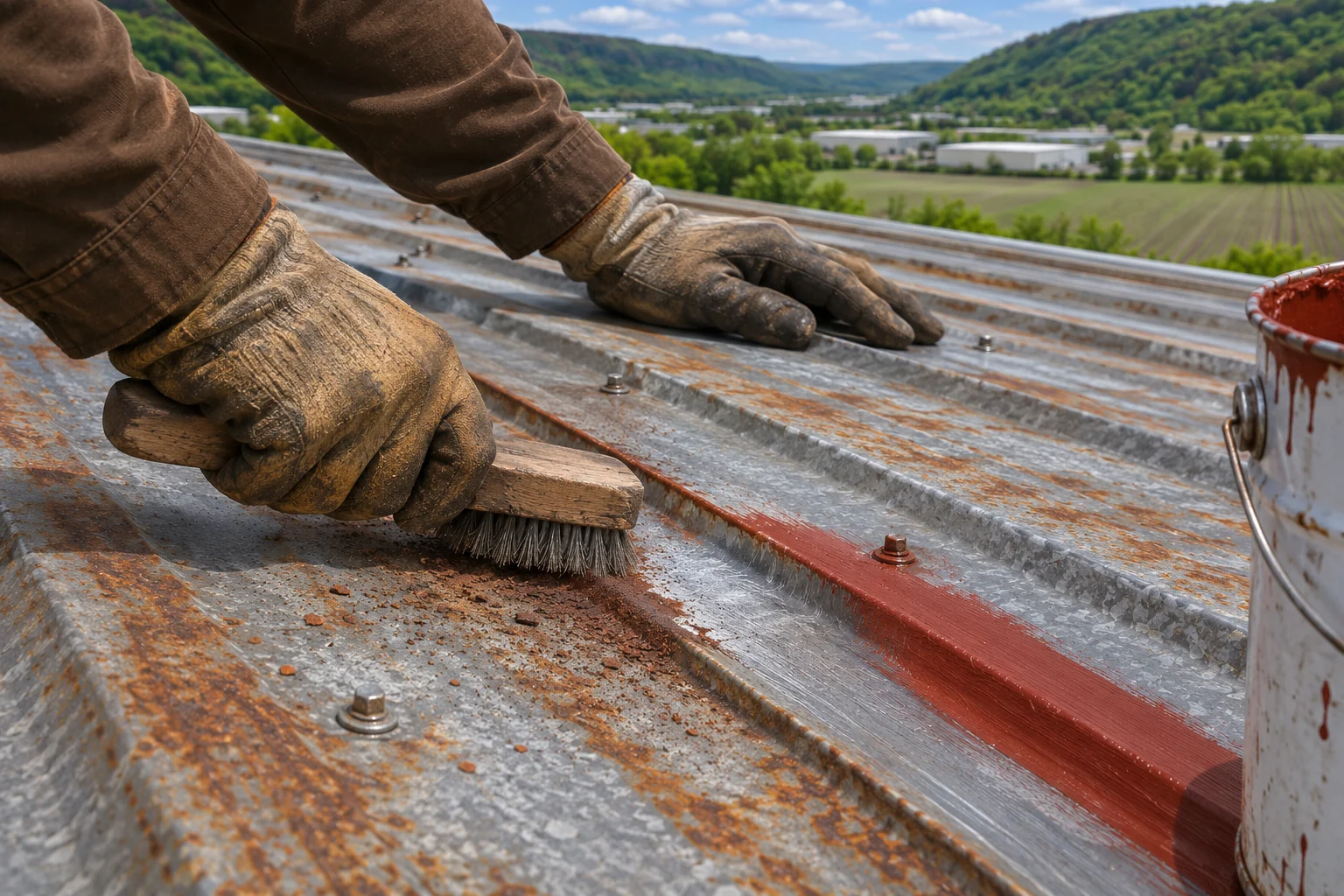
Peeling coating needs removal or preparation appropriate to the material and roof. We examine where separation ends and whether adjoining layers remain attached. The boundary is cleaned and treated so the new system connects across retained and exposed areas without resting on loose edges.
Different Materials at Earlier Repairs
Inspect
A roof can carry several repair products even where the broad coating appears uniform. Those materials require compatibility checks. We inspect patch edges and the surface below failing areas before defining the preparation that connects them with the next restoration application.
Benefits of Coating Your Roof
WarehousesCommercial blocksPlant roofs
A Prepared Coating Base
Cleaning and removing failing layers establishes the surface on which the new finish will depend. The preparation method follows the roof condition and product instructions. Adhesion checks inform the decision to retain material and identify where further treatment is necessary before application.
Repair Boundaries That Follow Condition
Peeling often extends beyond the first visible edge. We establish the affected area through inspection and preparation instead of limiting work to its initial appearance. This gives the repair a defined transition to retained coating and addresses loose material before a new finish covers it.
Product Information for Later Work
Recording the selected coating and preparation helps later repairs use compatible materials. Different roof sections can have different retained finishes, so that record should identify relevant boundaries. Maintenance visits can then compare peeling or wear with the preparation completed in those areas.
Commercial Roof Coating Options for Taylor
Metal Coating Preparation
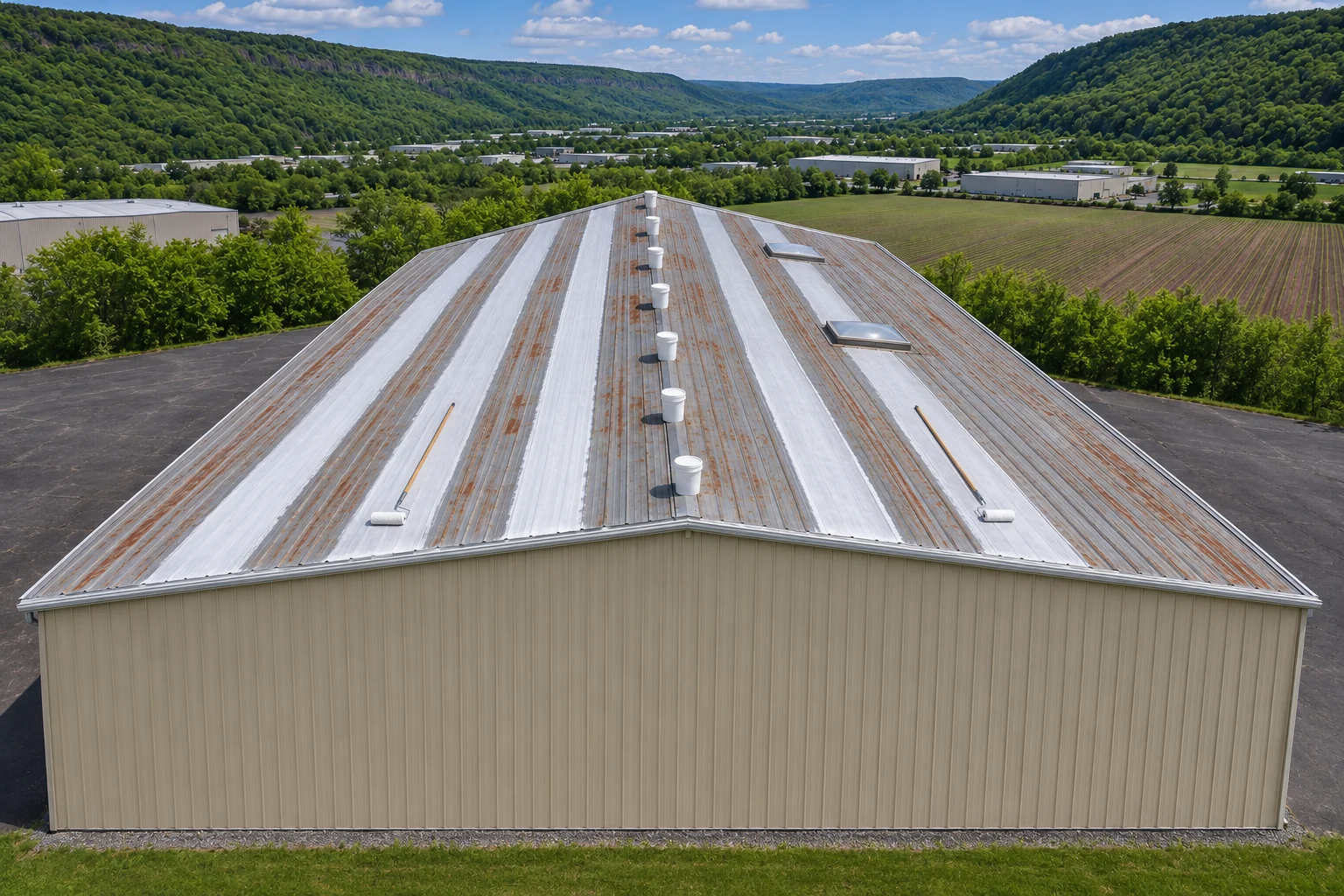
Metal roof restoration connects the finish assessment with corrosion, fastener and seam repairs. Exposed panels are prepared for the selected system while retained coatings are checked for attachment. The work includes the transitions between those surfaces and details around penetrations.
Silicone Recoat Assessment
Existing silicone and other finishes require identification before a new application is proposed. We use product guidance and adhesion checks to define compatible preparation. Future maintenance materials are considered as part of the system choice, especially at previously repaired seams.
Acrylic Finish Renewal
Acrylic recoating requires cleaning, stable retained material and an appropriate drying window. Primer needs depend on the actual substrate. We check raised ribs and patch boundaries so the renewed finish reaches the specified coverage across changes in texture and roof profile.
Metal Roof Coating for Taylor Buildings
Share any product names or repair records you have. Existing coating information helps focus compatibility checks on the Taylor roof.
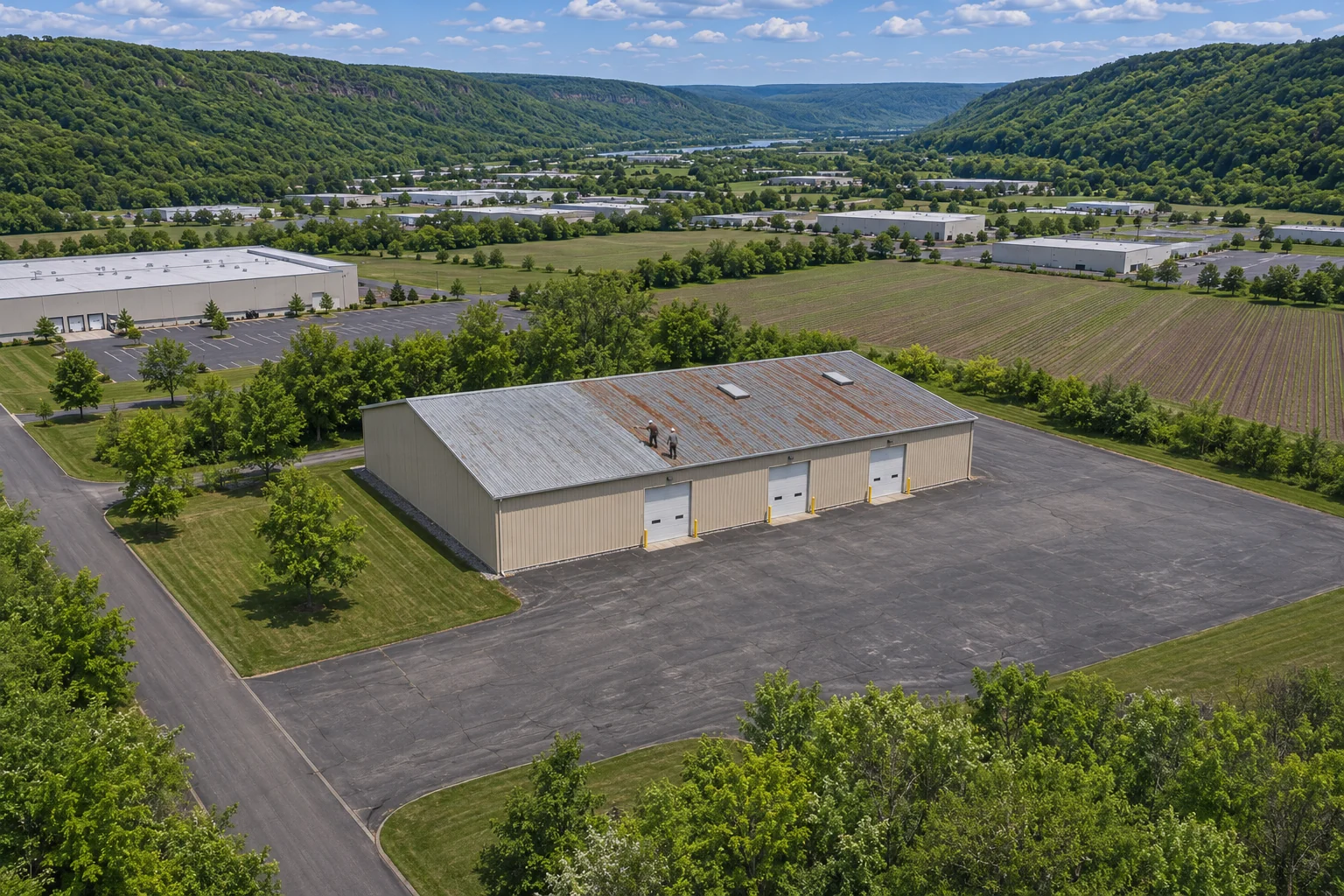
We inspect peeling areas and compare them with intact sections, seams and previous patches. The metal beneath damaged finishes is examined where accessible. These findings guide preparation and help identify whether other roof defects need repair before coating renewal.
02
Identify Existing Finishes
Available product records are compared with the materials on the roof. Where the finish is unknown, preparation and compatibility checks help establish the next step. The coating system is selected with the retained substrate in view, including different materials at repairs.
03
Prepare Test and Repair Areas
Loose layers and contamination are removed by methods appropriate to the surface. Prepared areas are checked for attachment and compatibility with the proposed materials. Those results inform the extent of preparation across the roof before the broad application begins.
04
Connect Exposed and Retained Surfaces
Primer and detail treatments follow the selected system requirements at material transitions. Seams and fasteners receive their repairs before the field finish. The preparation leaves a defined boundary where new coating crosses between exposed metal and retained layers.
05
Apply and Inspect the Finish
Coating is applied to the required thickness under the specified conditions. Coverage at patch edges and raised profiles is checked before completion. Records identify the materials used and areas needing attention during later inspections, especially where earlier finish failure was concentrated.
Taylor is one of our approved commercial coating locations. We also serve the towns below; call us about another area or send a message through Contact.
Thin finish at roof ribs is checked for wear and incomplete application.
Metal Roof Coating Questions for Taylor
Could old finishes prevent a Taylor metal roof from being recoated?
An existing finish can prevent the proposed recoat when its attachment or compatibility fails the assessment. We inspect prepared areas and identify material that needs removal. The new system needs a dependable base across the retained roof, including earlier patches and exposed metal where old layers have separated.
Does washing a roof prove the old coating will hold?
Washing removes contamination but is only one part of preparation. The retained coating still needs evaluation for attachment and compatibility. Peeling edges and earlier repairs are checked separately. We use the condition of the prepared surface to decide whether more removal, primer or detail work is required before another finish.
Can different old coatings remain on the same roof?
Retention depends on the condition and compatibility of each material with the proposed system. We identify the differences and examine their boundaries before application. A preparation method appropriate to one section can require adjustment elsewhere. Those transitions need a defined treatment so the completed coating connects across the retained surfaces.
What if peeling becomes more extensive during preparation?
Preparation can expose separation beyond the initially visible area. The repair boundary should follow those findings, with the property contact informed of the additional work needed. Loose material must be addressed before coating continues. We inspect adjoining surfaces so the renewed finish does not rely on layers that are already detaching.
How should new peeling be handled after later roof work?
New peeling should be inspected for attachment failure, incompatible repair material or damage caused during access. We compare the area with the recorded roof system and previous preparation. The repair then addresses the cause and uses compatible products. Adding more coating over a loose edge leaves the underlying separation unresolved.
Discuss Taylor Metal Roof Coating
Start with an adhesion and preparation assessment for the existing finish on your Taylor roof.