Wilkes-Barre Metal Roof Coating
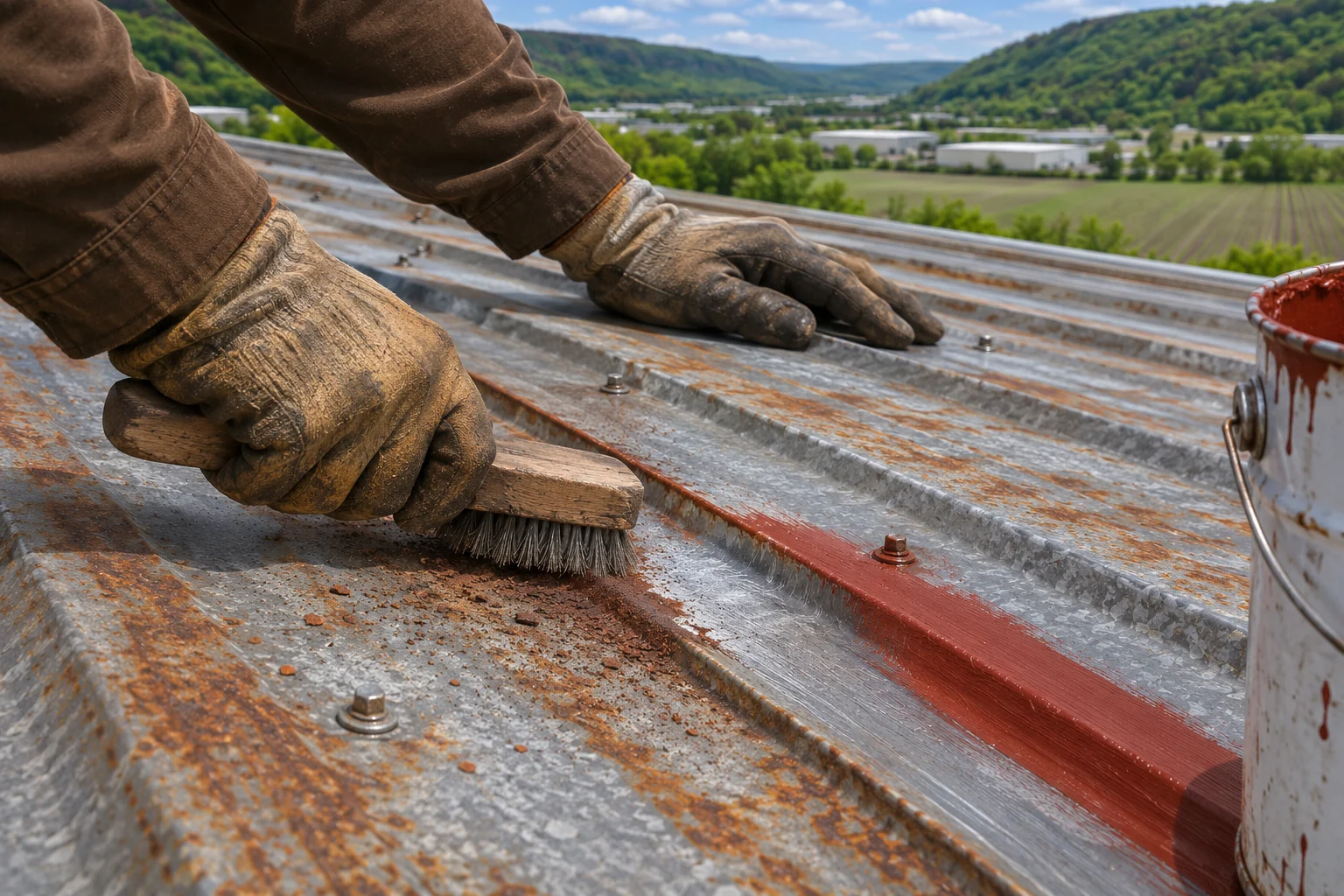
Hands preparing a rusted panel seam for coating

Wilkes-Barre Metal Roof Coating Questions

Answers About Roof Prep Materials And Care

Wilkes-Barre metal roof coating questions cover commercial restoration, repair boundaries and the preparation each roof needs.

Explore Wilkes-Barre Metal Roof Coating Questions

Wilkes-Barre metal roof coating questions below address the existing roof, the coating system and the building conditions that influence the work.

Roof Coating Answers

Evaluating restoration

Which coating defects should trigger a metal roof inspection?

Worn-through areas, peeling and cracks at moving details should trigger inspection before recoating is selected. We check whether the surrounding finish remains attached and whether moisture or corrosion lies beneath the damage. The next application should follow those findings, not simply renew the appearance of a roof whose underlying problems continue.

Which preparation details belong in a Wilkes-Barre metal coating budget?

Preparation should be identified within a Wilkes-Barre coating budget of about $2.50 to $4.00 per square foot of roof, compared with about $5 to $8 for replacement. We evaluate roof size and access, rust and seam prep, fastener sealing, coating type and thickness, coat count, penetrations and flashing.

The scope should explain that work before a planning range is applied to the roof.

Can a distribution center’s metal roof be restored around earlier repairs?

A distribution center’s roof may be restored around earlier repairs if their condition and compatibility support the new system. We inspect patch edges, adjoining laps and moisture evidence before deciding what can remain. Unsuitable repairs may need removal, so a coating proposal should not automatically preserve everything already attached to the panels.

Is surface rust different from metal loss when deciding whether to coat?

Surface rust and metal loss need different consideration because coating preparation cannot restore missing strength. We inspect panel edges, fastener holes and accessible undersides to determine whether corrosion remains treatable. Perforation or weakened attachment can require panel work before restoration, even where the visible surface appears capable of accepting a finish.

Commercial metal details

How should hail effects be evaluated before coating metal panels?

Hail effects need evaluation for punctures, opened seams and affected flashing before coating is proposed. We distinguish dent appearance from damage that changes weather protection or attachment, including summer wind effects around the perimeter. Required repairs should be completed first because a finish cannot restore the function of split metal or a loose connection.

Why can commercial coating prices vary despite similar roof areas?

Different preparation and detail work can change prices within the coating range of about $2.50 to $4.00 per square foot of roof. Replacement is compared at about $5 to $8 per square foot. We assess size, access, rust and seams, fastener sealing, coating type, thickness, number of coats, penetrations and flashing.

The actual work depends on those findings rather than area alone.

Should rust around exposed screws be treated before fastener sealing?

Rust around exposed screws needs assessment and suitable preparation before sealing or coating proceeds. We check whether the metal, washer and underlying attachment remain reliable rather than cleaning only the visible stain. Correcting an unsuitable fixing point comes before its weatherproof detail, so the new finish does not depend on continued movement underneath.

Silicone roof coating

Can a warm afternoon make cold roof panels suitable for silicone?

A warm afternoon does not establish that cold panels meet the silicone system’s application requirements. We check surface temperature, frost and condensation along with the weather through curing. Shaded areas and overnight cooling can differ from the air forecast, so the proposed work window needs to support the whole application process.

How should the required silicone coats appear in a roof coating budget?

The budget should identify the product’s required thickness and application passes. Coating planning prices are about $2.50 to $4.00 per square foot of roof, against about $5 to $8 per square foot for replacement. We include size, access, rust and seam preparation, fastener sealing, coating type, thickness, coat count, penetrations and flashing.

A coat number alone cannot establish suitable coverage.

Which silicone limitations should a corrugated box plant consider?

A box plant should consider wet-surface access, dirt buildup and compatibility with later silicone repairs alongside the roof’s suitability. We inspect service routes and the condition of existing finishes before selection. Drainage defects and unsound panels still require attention, so choosing the coating does not remove the need to repair the assembly beneath it.

Acrylic roof coating

Why do spring and fall acrylic projects need an overnight weather check?

Overnight weather matters because acrylic needs suitable conditions during placement and throughout its drying period. We review the product’s temperature limits together with humidity, dew and possible rain. Shaded areas or heavier coverage can dry differently, so scheduling another pass requires attention to the actual roof rather than a fixed calendar interval.

What work belongs in an acrylic roof coating price?

An acrylic price needs the preparation and specified finish defined through inspection. The coating planning range is about $2.50 to $4.00 per square foot of roof; replacement is about $5 to $8 per square foot.

We assess size, access, rust and seam preparation, fastener sealing, coating type and thickness, number of coats, penetrations and flashing before choosing the building’s scope.

What can shorten acrylic coating service life on commercial roofing?

Persistent moisture, inadequate drying, weak adhesion and service wear can shorten acrylic coating usefulness. We investigate drainage and recurring movement at details before recommending repairs or another application. A product unsuitable for those conditions should not be selected for its initial price, and the remaining life should be judged by condition rather than promised years.

Spray foam roofing

Does winter foam insulation planning need to account for interior humidity?

Winter insulation planning must account for interior humidity and how air and moisture move through the roof assembly. We inspect condensation evidence and wet materials before considering foam over existing roofing. Application weather and future protective-coating maintenance also matter, so insulation thickness alone should not be treated as a solution to every moisture problem.

Can a foam roof proposal rely on the coating price range alone?

A foam proposal needs its own assembly scope rather than relying on coating prices alone. The planning figures are about $2.50 to $4.00 per square foot of roof for coating and about $5 to $8 per square foot when replacement is needed.

We assess size, access, rust and seam work, fastener sealing, coating type, thickness, coats, penetrations and flashing, plus foam thickness and any required substrate repairs.

Can spray foam keep a leaking metal roof serviceable without repairing its defects?

Spray foam should not be used to retain a leaking metal roof without correcting its defects. We establish attachment, dryness and suitable panel condition before evaluating an overlay. Continued service also depends on sound flashing and maintenance of the protective surface, so covering old problems does not establish a reliable roof or a promised lifespan.

Commercial shingle roofing

Can a church coat its shingles with a product intended for metal?

A church should not assume a metal roof product is suitable for its shingles. We need explicit guidance supporting the actual shingle and coating combination before considering application. Roof condition and ventilation also need review, because treatment cannot repair failed shingles or correct moisture problems simply by adding an exterior film.

How should remaining life be assessed on coated commercial shingles?

Remaining life needs assessment of the shingles and underlying roof, including the condition beneath the coating. We examine brittleness, missing granules, flashing and moisture beneath suspect areas before judging serviceability. A supported treatment still cannot renew failed components, and no surface condition should be used to promise a fixed number of additional years.

What should be established before pricing shingle coating on a commercial property?

Product compatibility must be established before shingle coating is priced as suitable work. Planning comparisons are about $2.50 to $4.00 per square foot of roof for coating and about $5 to $8 per square foot for replacement.

We consider size, access, coating type, thickness, coats, penetrations, flashing and fastener sealing, plus rust or seam preparation where relevant metal details are present.

Weather and maintenance

What should influence the choice between silicone and acrylic restoration?

Drainage, compatibility and the available application window should influence the choice between silicone and acrylic. We also consider how equipment servicing will affect maintenance and future repairs. A coating can be worthwhile on a sound, prepared roof, but the choice needs to fit those conditions rather than rely on a universal product ranking.

Can snowmelt reveal weaknesses beside coated roof drains?

Snowmelt can reveal weaknesses where ice obstructs drains or gutters and holds water against adjacent details. We inspect those connections and joints exposed to freeze-thaw movement when access is safe. Heavy wet snow adds a separate loading concern requiring qualified review, rather than an assumption that sound-looking coating establishes structural capacity.

Could humidity complicate restoration above a downtown brick commercial block?

Humidity can complicate restoration when condensation or wet insulation develops beneath a brick commercial building’s roof. We compare interior moisture with rain entry at walls and flashing before recommending coating. The scope should distinguish exterior defects from conditions inside the assembly, because a new finish cannot resolve every source of dampness.

How can coating work fit around a corrugated box plant’s operations?

Coating work can fit around plant operations when access, preparation exposure and protection below repairs are coordinated in advance. We review intake locations, stored materials and equipment routes before setting the sequence. Some tasks may require temporary isolation, particularly where damaged panels must be opened rather than simply cleaned at the surface.

Do roof coatings need attention after maintenance crews cross the panels?

Roof coatings need inspection where service traffic may have damaged coverage or disturbed flashing. We compare access routes and equipment details with earlier condition records to locate changes. The response should address any underlying movement or attachment problem too, rather than apply more finish to a surface that will be stressed again.

Should replacement of rusted roof supports be listed separately from Wilkes-Barre coating work?

Restoration plans should separate preparation of existing panels from replacement of metal or supporting components. We mark those differences in the scope so the reviewing authority can see more than the proposed finish.

The UCC is Pennsylvania’s statewide code framework, and our project inquiry includes the underlying repairs that the word coating alone would leave unexplained.

Town questions

Can a Kingston warehouse keep repaired panel laps beneath a coating system?

A Kingston warehouse may retain repaired laps where inspection confirms a sound, compatible connection for the coating system. We check movement, old repair materials and the condition of adjacent metal before deciding what stays. Preparation should remove unsuitable layers rather than assume every existing patch can become part of the renewed assembly.

Why inspect the underside of a Nanticoke equipment roof before coating?

Underside inspection can reveal corrosion or moisture not apparent on the exposed surface of a Nanticoke equipment roof. We compare those findings with exterior leaks and indoor conditions before defining preparation. A finish on the upper face cannot restore weakened metal or stop condensation that continues beneath the panels.

What should coating preparation address around Pittston rooftop vents?

Preparation around Pittston vents should address damaged flashing, incompatible old seals and contamination from equipment use. We inspect the connection and its movement before selecting a coating detail. Later service access also needs consideration so the completed work can be maintained without repeatedly disturbing vulnerable areas around the opening.

Could old finishes prevent a Taylor metal roof from being recoated?

Old finishes can prevent recoating as proposed if their bond or compatibility is unsuitable. We assess prepared areas and inspect failing patches on the Taylor roof before deciding what must be removed. The selected system needs a reliable base, so the new layer rests on material that remains attached to the metal.

How should a Hellertown owner evaluate thin coating at roof ribs?

Thin coating at Hellertown roof ribs should be checked for wear, incomplete coverage and the condition beneath the finish. We compare those areas with seams and service routes to understand the cause. Any repair or recoat needs compatible preparation and specified thickness, not merely enough material to make the surface look uniform.

Discuss Wilkes-Barre Metal Roof Coating Questions

Discuss your roof’s condition and the coating questions that apply to your building.

Call Us · (484) 978-7950