Wilkes-Barre acrylic roof coating is evaluated against drainage, existing finish compatibility and the time each application needs to dry.
Draining Roof Surfaces
Panels that drain freely and retain dependable attachment are candidates for acrylic evaluation. We inspect lap details and the existing finish before defining preparation. Cleaning and any required primer establish the base for coating, with the actual panel profile considered when estimating coverage.
Correct Water and Substrate Defects
Water trapped behind debris or held at damaged details needs investigation before application. Failed panels and wet materials also require repair. We establish those boundaries early so the acrylic system is applied to a prepared assembly with drainage and attachment conditions addressed.
Acrylic Roof Coating Preparation in Wilkes-Barre
Acrylic Coating Temperature Limits in Spring and Fall
Inspect
The selected product sets application and drying limits. We compare those requirements with roof temperature, humidity and the forecast beyond the work period. Shaded seams and thicker detail treatments can dry at different rates, affecting when another application can begin.
Acrylic Roof Coating Cost
Inspect
An acrylic estimate considers rust treatment, fastener sealing, cleaning and the amount of coating needed for the specified thickness. The panel profile and access arrangements also matter. Measuring roof area starts the discussion; inspection establishes the preparation and repairs included in the work.
Chalk and Loose Finish
Inspect
Powdery residue and peeling material interfere with a stable coating base. Cleaning removes contamination, while failing layers require additional treatment. We check the prepared surface before primer or acrylic is applied so the renewed finish rests on material that remains attached.
Ribs and Narrow Laps
Inspect
Raised profiles create different faces and edges for the applicator to cover. We examine thin areas along ribs and the joints between sheets. Detail work comes before the broad application, with coverage checked at the changes in profile where uneven coating is easier to miss.
Commercial Roof Coating Options for Wilkes-Barre
Acrylic Recoating
Recoating starts by checking the existing acrylic finish for attachment and contamination. The next application follows cleaning and detail repair. Product compatibility, thickness and drying conditions govern the work, even when the earlier finish appears uniform from the ground.
Silicone Consideration
Silicone has different application and maintenance requirements. An existing coating should be identified before a material change is proposed. We assess compatibility and the roof’s drainage conditions so the chosen approach includes preparation for both the field and repaired details.
Repairs to Metal Panels
Panel replacement, screw repairs and flashing correction are separate from the acrylic finish. Those repairs are completed where inspection identifies physical defects. Retained roofing then receives the preparation and coating sequence that fits its current material and condition.
Benefits of Coating Your Roof
WarehousesCommercial blocksPlant roofs
Renewed Panel Finish
Acrylic restores surface coverage after dirt, loose material and treatable rust have been addressed. The application follows the panel profile and specified thickness. Inspection of rib faces and lap edges helps verify that the finish covers more than the broad, easily reached flats.
Detail Work Included
Seams and fasteners receive preparation before the field coating is applied. Compatible reinforcement supports the specified treatment around penetrations and flashing. Correcting those individual connections gives the overall restoration a defined sequence instead of relying on the field application to repair every defect.
Accessible Maintenance Records
Recording the coating product and repair locations helps future maintenance identify compatible materials. Photographs of curbs, gutters and service routes provide reference points for later checks. A localized worn area can then be evaluated alongside its original preparation and the activity occurring around it.
Acrylic Roof Coating for Wilkes-Barre Buildings
Share any recent coating history and places where water lingers. We can inspect those details before defining an acrylic restoration scope.
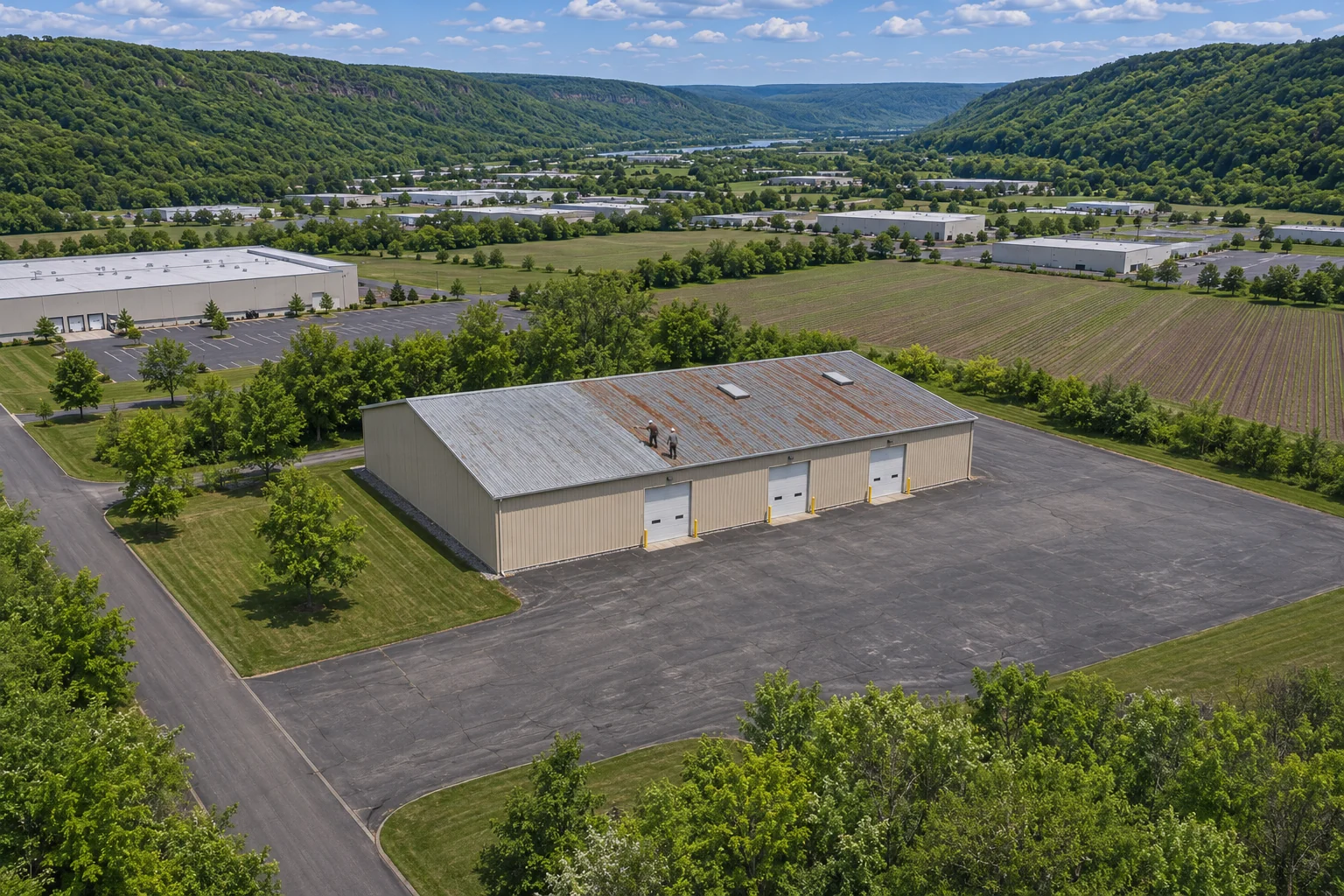
We inspect the finish, panel connections and paths to gutters or drains. Interior staining is compared with exterior conditions. The findings distinguish repair work from coating preparation and establish whether the retained roof can support the proposed acrylic system.
02
Clean the Surface
Dirt, chalk and loose residue are removed with a method appropriate to the roof and product. Cleaning includes ribs, lap edges and corners beside equipment. The surface is checked again after preparation, with drying allowed before primer or coating work continues.
03
Repair and Reinforce Details
Open seams, damaged flashing and failing fasteners receive their specified repairs. Compatible sealants or reinforcement are installed where required. These details are completed before broad coating passes so the application can connect with prepared transitions around the roof.
04
Check the Drying Window
Roof temperature, humidity and the forecast are compared with product instructions before application. The check covers the time needed after placement as well as working hours. Conditions can change across shaded and exposed parts of the same building.
05
Coat and Inspect the Panels
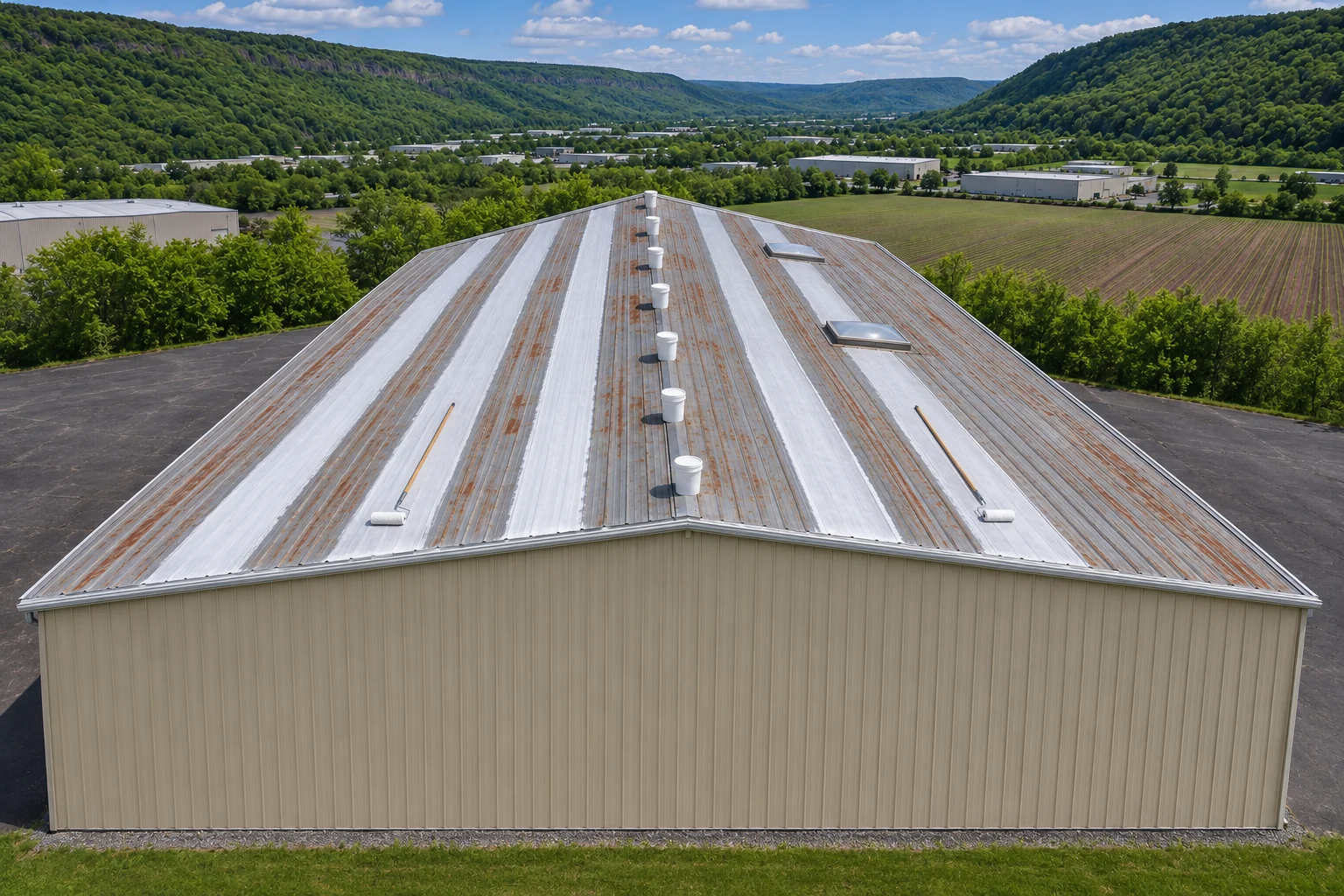
Acrylic is applied in the specified sequence and checked for coverage at ribs, edges and details. Each pass must reach the required condition before further work. The completed roof is reviewed for thin areas and for maintenance access around rooftop equipment.
Rusted metal and unreliable fasteners need attention before an acrylic finish. Our metal roof coating work connects those repairs with preparation of the panel surface, including the condition of laps and flashings around openings in the roof.
Where a different coating is considered, silicone work starts with compatibility and substrate checks. Existing acrylic should be identified and evaluated before a new material is selected. The assessment includes later maintenance and the repairs already present on the roof.
Acrylic Roof Coating Questions for Wilkes-Barre
Why do spring and fall acrylic projects need an overnight weather check?
Acrylic needs acceptable conditions during drying, including the period after application ends. Dew, rain or falling temperature can affect that window. We use the selected product’s requirements and the actual roof conditions to schedule passes. Air temperature at the start of the afternoon provides only one part of that assessment.
What work belongs in an acrylic roof coating price?
The price should include defined preparation and the specified finish. Our coating planning comparison is about $2.50–$4 per square foot, against $5–$8 for replacement. Inspection establishes rust work, fastener sealing, flashing, access and coat thickness. Those details determine what is included for the particular commercial building.
What can shorten acrylic coating service life on commercial roofing?
Moisture exposure, poor attachment of earlier layers and wear from servicing can affect acrylic condition. We inspect drainage and the details around worn areas before deciding on repair or recoating. The response should address the cause of deterioration, with the remaining serviceability judged from the roof’s condition.
Does a thick coat remove the need for seam treatment?
Seam treatment remains a separate part of the specified system. Open or moving connections need repair and compatible detail materials before field coating. Adding thickness across a defective joint leaves its underlying condition unresolved. We inspect the lap and complete the repair before the acrylic application covers the surrounding panel.
When should equipment access resume after acrylic work?
Access depends on the finish reaching the condition required by its product instructions. Drying varies with temperature, humidity and application thickness. We coordinate equipment needs before work starts and keep traffic away from uncured areas. Later servicing should protect the coating at repeated walking routes and around curbs.
Discuss Wilkes-Barre Acrylic Roof Coating
Arrange an estimate for acrylic preparation, detail repairs and coating on your building.